
Active Freedom
Reflecting on the concept of active freedom from 50th Law by Robert Greene and 50 Cent.

I fully believe in the concept of free-will. I believe that as humans, we are always presented with a set of actions throughout our days and we are the ones choosing which actions we take. However, not everyone believes in this concept; some people believe that the environment plays a much greater role in what people do.
Still, we shouldn’t be asking whether free-will exists or not: that is a philosophical question that as far as we know has no answers. Instead, we should be asking what belief is more useful—to believe in free-will or to believe in its opposite concept, “determination”?
You know what my answer to that question is, and today, reading Chapter 9 of 50th Law by Robert Greene and 50 Cent has solidified by belief in free-will into an even greater concept defined as active freedom.
50th Law - Active Freedom
A continuation of Robert Green’s famous book 48 Laws of Power, 50th Law follows a similar approach where it breaks down one specific law of power that it describes as: “Your fears are a kind of prison that confines you within a limited range of action. The less you fear, the more power you will have and the more fully you will live.”
In Chapter 9 titled “Push Beyond Your Limits—Self-Belief”, the concept of active freedom is defined:
It is a state of mind that we must work to attain and hold on to—with much effort. It is something active and not passive. It comes from exercising free will. In our day-to-day affairs much of our actions are not free and independent. … When we act with freedom, we ignore any pressures to conform; we step beyond our usual routines. Asserting our will and our individuality, we move on our own.
What made me inspired to write this blog are two later paragraphs that follow from this definition. In the first one, the book presents a commonly held reservation against this concept that is very similar to the reservations against free will:
Many will argue that this idea of active freedom is basically an illusion. We are products of our environment, so they say. If people become successful, it is because they benefited from certain favorable social circumstances—they were in the right place at the right time; they got the proper education and mentoring. Their willpower played a part, no doubt, but a small part. If circumstances were different, so the argument goes, these types would not have had the success they had, no matter how strong their willpower.
The next paragraph was the insightful one which came to rebuke this entire argument. It reads:
All kinds of statistics and studies can be trotted out to support this argument, but in the end this concept is merely a product of our times and the emphasis on passive freedom. It chooses to focus on circumstances and environment, as if the exceptionally free actions of a Frederick Douglass could also be explained by his physiology or the luck he had in learning to read. In the end, such a philosophy wants to deny the essential freedom we all possess to make a decision independent of outside forces. It wants to diminish individuality—we are just products of a social process, they imply.
Please, take a pause. Think about this concept advisedly.
Frederick Douglass is a Black Swan
What Greene did in this last paragraph is point out a black swan—the concept popularized by author Nassim Taleb. If you’re not familiar with the concept, it goes like this.
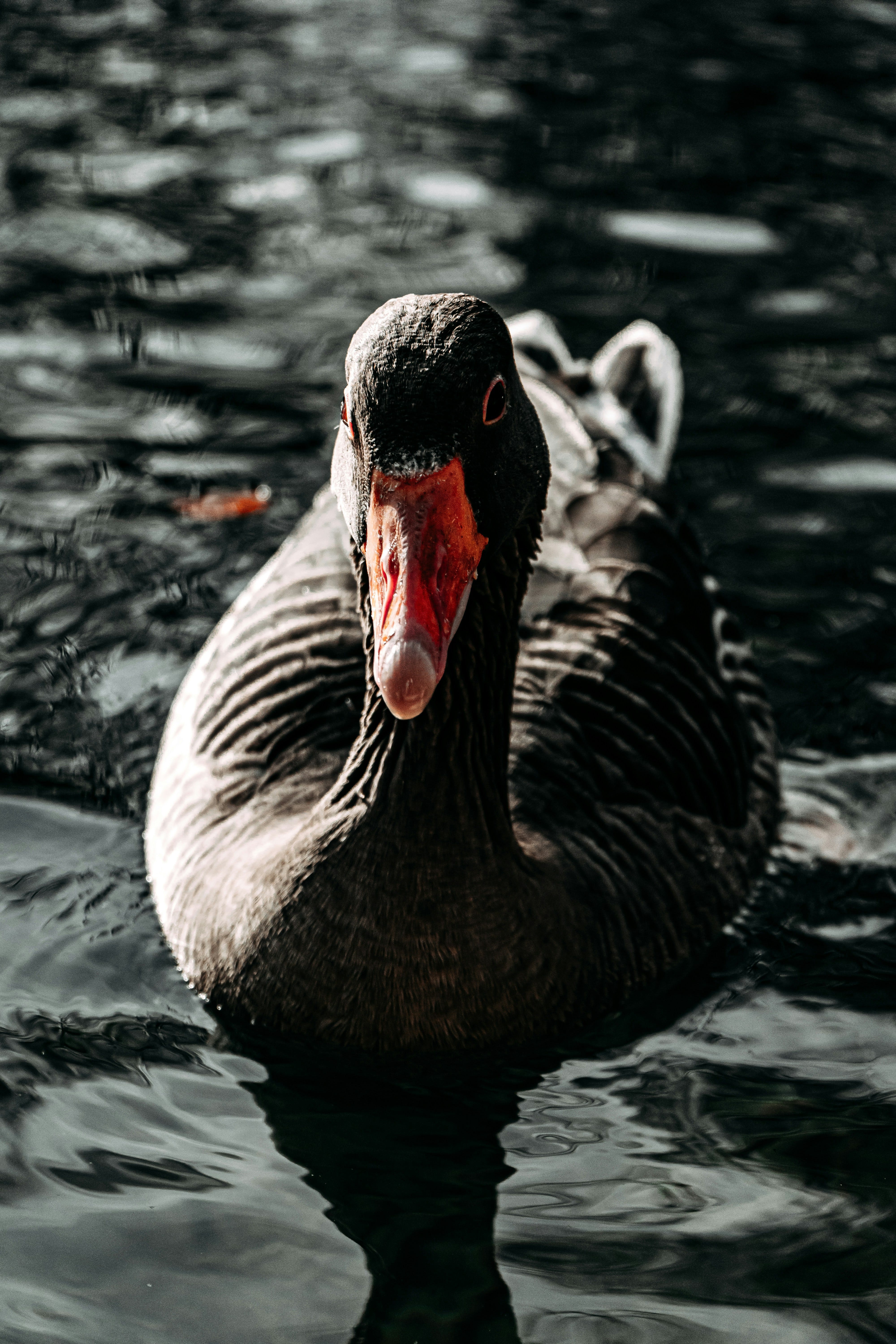
(Supposedly) for a long time, people believed that all swans (see image of a swan below) were white. And for a long time, all evidence pointed to this to be true. No one could find any swan of any other color. However, all it took to refute this strongly held belief is the appearance of a black swan.
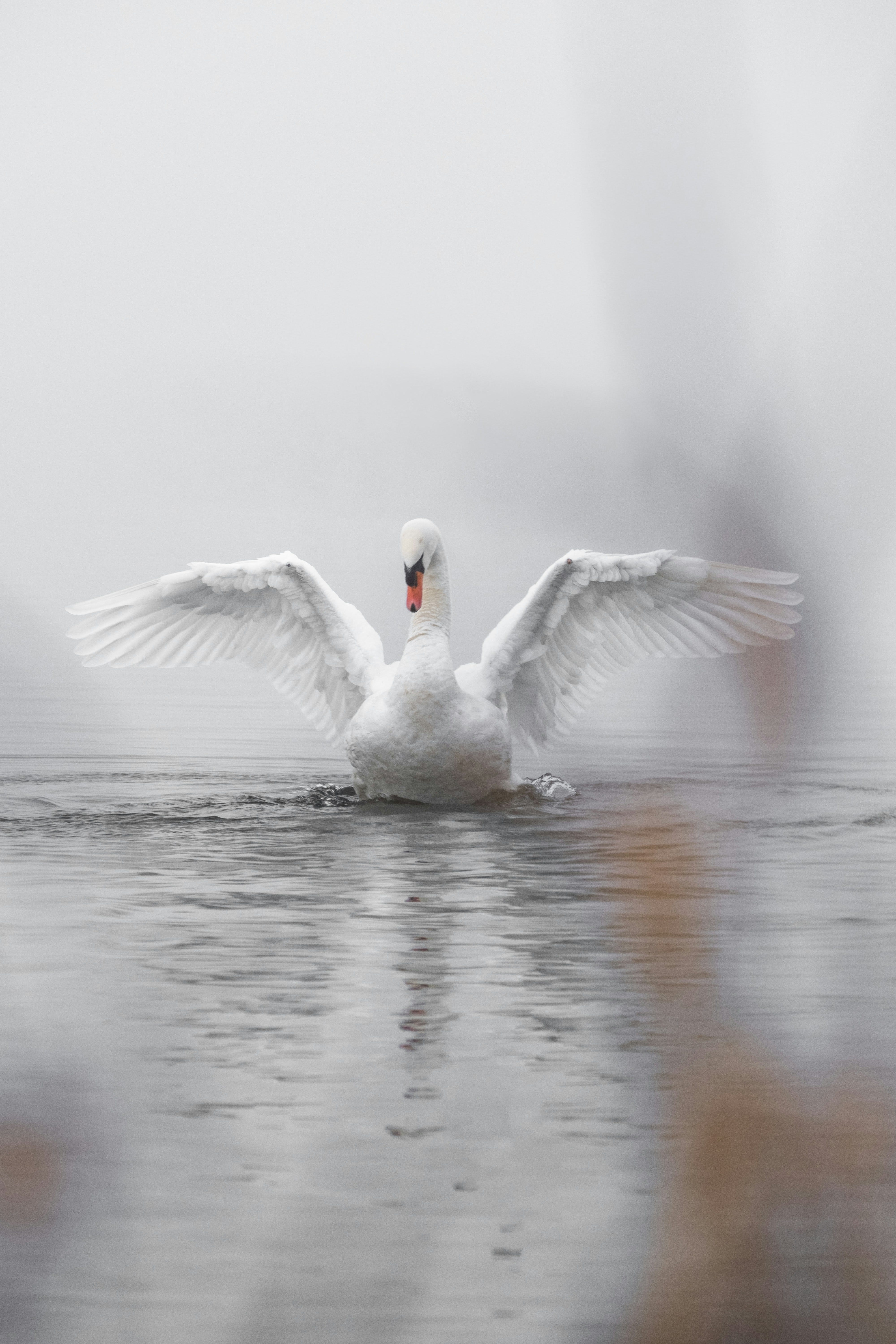
In a similar fashion, many believe that who you are is mostly a bi-product of your environment. Most—if not all—evidence point to it. Studies show that success can be correlated to the zip code you’re born in or to the friends you have. There are even studies that demonstrate success in sports to be highly correlated with the month one is born. Countless studies point to how one’s the environment shapes their future and success in life. However, all it takes is one counter example to refute this belief. All it takes is to observe one black swan.
Frederick Douglass was born in slave America, and his success as both an author and an orator does not make sense. Yet, he was a wildly successful individual. Those who hold these strong beliefs about the environment shaping everything will, as the book point out, try to find reasons for why Douglass’ success is still coming from his environment. They will say that Douglass got lucky because he learned to read. They will try to find reasons behind Douglass’ success that are anything other than Douglass’ strong willpower, and that’s exactly why Greene says that “in the end, such a philosophy wants to deny the essential freedom we all possess to make a decision independent of outside forces”.
Active Freedom is a Belief
They say that correlation doesn’t imply causation. If that’s true, then no amount of studies that rely of data can prove that free-will and active freedom don’t exist. No amount of studies can show that you and I don’t have free-will.
In the end, this—like the many other existential questions that we all have as humans such as the existence of a God—ends up becoming a question of belief. It’s so easy to blame one’s environment for one’s circumstances because it absolves one of the reason to act. On the flip-side, the reason it’s so is difficult to accept active freedom, willpower, and free-will is because it’s hard. To accept and believe in these concepts is equivalent to taking accountability in one’s life circumstances. It is to say that I am here solely because of me, and that’s hard—especially if you don’t like where you are right now.
I say, the choice is yours.
Personally, I choose hard. While my environment still plays a part in my circumstances, I choose to believe that my willpower plays a stronger role in my life’s success. I choose accountability and responsibility. I choose this path because it makes me feel in control. It gives me a reason to look for another way when I’m stuck. It drives me to ask questions and to believe that there’s an answer to my problems. It gives me agency, and while agency is hard, agency is freedom.
What about you?